
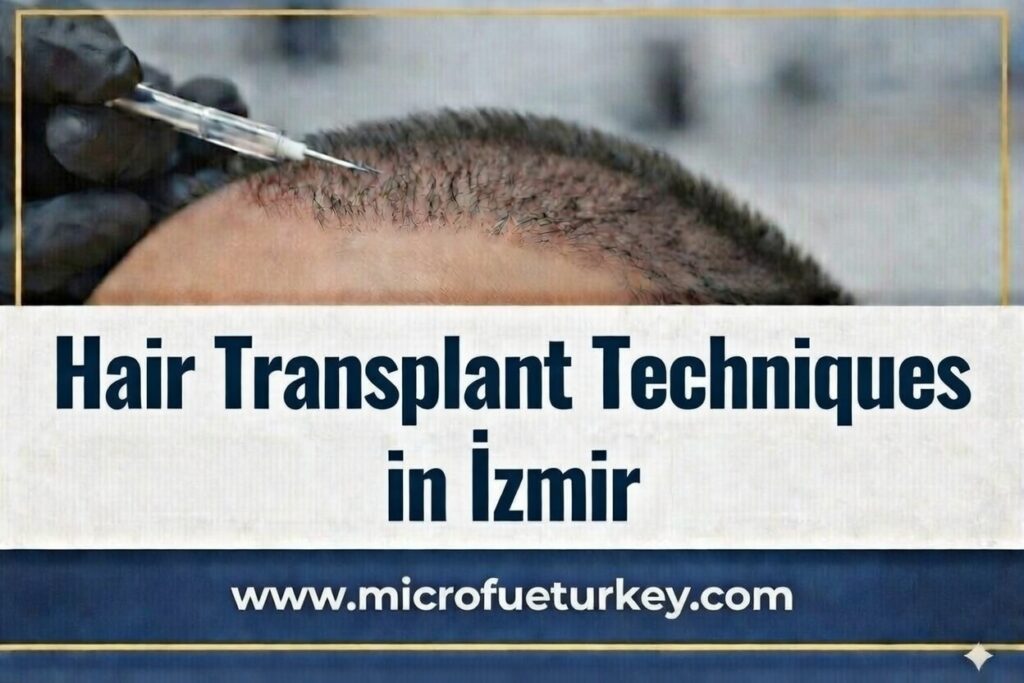
DHI Hair Transplant in Kusadasi: Cost, Procedure & Results
If you are considering a DHI hair transplant in Kusadasi, Turkey offers an attractive combination of experienced medical teams, modern hair restoration techniques and convenient travel options for international patients. Kuşadası, located on Türkiye’s Aegean coast, has become an increasingly interesting alternative for patients who want their hair transplant treatment away from the intensity of larger cities.
Direct Hair Implantation, commonly known as DHI hair transplantation, is a modern hair restoration method in which harvested follicular units are implanted using a specialised implanter pen. The technique allows the medical team to control the placement, angle and direction of transplanted grafts during implantation.
For patients travelling from the UK, Ireland and other European countries, choosing a hair transplant in Kusadasi can also provide the opportunity to combine treatment with a comfortable stay on the Turkish Aegean coast.
This complete guide explains the DHI procedure, expected results, recovery process, graft numbers, costs, advantages and the questions international patients should ask before booking treatment.
What Is a DHI Hair Transplant?
DHI stands for Direct Hair Implantation.
The procedure is based on follicular unit extraction. Individual follicular units are removed from a suitable donor area, usually the back and sides of the scalp, before being prepared for implantation.
The major difference is the implantation stage.
During DHI, grafts are loaded into specialised implanter pens and inserted into the recipient area. This allows the medical team to manage factors such as depth, direction and angle during placement.
The fundamental stages normally include:
- Hair and scalp assessment
- Donor-area evaluation
- Hairline planning
- Local anaesthesia
- Follicular-unit extraction
- Graft preparation
- Loading grafts into implanter pens
- Direct implantation
- Post-operative examination
- Aftercare and recovery
The exact treatment plan should always be determined individually.
There is no single hair transplant technique that is automatically best for every patient.
Why Choose DHI Hair Transplant in Kusadasi?
Patients researching hair transplant Turkey frequently encounter Istanbul because of the city’s enormous medical-tourism industry. However, Istanbul is not the only destination available.
Kuşadası provides a different experience.
Located on the Aegean coast near İzmir, Kuşadası is internationally known as a holiday destination and cruise port. It offers hotels, restaurants, beaches and tourism infrastructure while remaining considerably smaller than Istanbul.
For international hair transplant patients, this can mean a more relaxed environment during the first few days of recovery.
Patients may choose Kuşadası because they are looking for:
- DHI hair transplantation
- FUE hair transplantation
- Sapphire FUE
- Hairline restoration
- Crown transplantation
- Density improvement
- Female hair transplantation
- Beard transplantation
- PRP-supported treatment
- Post-operative care
However, destination should never be the only factor when choosing treatment.
The quality of assessment, medical supervision, donor management, hairline planning, graft handling and aftercare are much more important.
Who Is Suitable for a DHI Hair Transplant?
Suitability cannot be determined from age or hair-loss pattern alone.
A proper consultation should evaluate several factors, particularly the quality of the donor area.
A patient may be suitable for DHI if there is sufficient healthy donor hair and the pattern of hair loss can realistically be improved through transplantation.
The assessment should consider:
- Current hair-loss pattern
- Donor-area density
- Hair thickness
- Hair characteristics
- Scalp condition
- Previous hair transplants
- Existing hair in the recipient area
- Family history of hair loss
- Patient age
- Medical history
- Expectations
One of the most important questions is not simply how many grafts can be extracted.
The more important question is how many grafts can be safely removed while protecting the appearance of the donor area.
Responsible donor management is essential because donor hair is limited.
DHI Hair Transplant Consultation
A successful DHI hair transplant in Kusadasi should begin with a detailed consultation.
International patients often start by sending photographs for an initial assessment.
Useful photographs normally include the front, both sides, top, crown and donor area at the back of the scalp.
Based on these images, an initial treatment recommendation may be possible.
However, photographs have limitations. Final planning should be confirmed after an in-person examination.
During consultation, the medical team should discuss the patient’s hair-loss pattern, donor capacity, expected graft requirement and realistic coverage.
This is also the stage where the hairline can be planned.
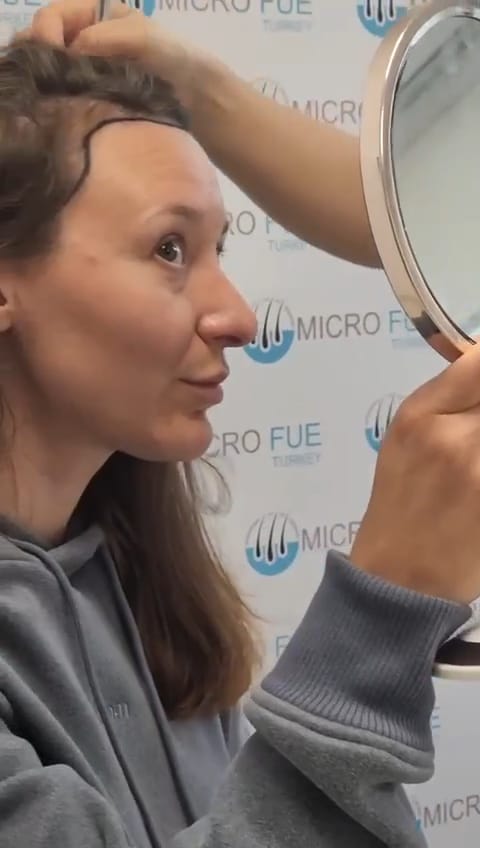
Natural Hairline Design
A natural-looking hairline is one of the most important elements of hair transplantation.
The objective should not simply be to create the lowest possible hairline.
An excessively low or perfectly straight hairline may look unnatural as the patient gets older.
Hairline planning should consider facial proportions, age, existing hair, donor capacity and the possibility of future hair loss.
Natural hairlines normally include subtle irregularities rather than appearing artificially straight.
The direction and angle of implantation are also extremely important.
Even when a large number of grafts survive, incorrect placement can create an unnatural appearance.
This is one reason why DHI attracts considerable attention: implanter pens can provide detailed control during the implantation process.
How Does DHI Hair Transplant Work?
On the treatment day, the process begins with final planning and preparation.
The donor and recipient areas are assessed again before the procedure starts.
Local anaesthesia is generally used.
Follicular units are then extracted individually from the donor area using appropriate extraction instruments.
Each follicular unit may contain one or several hairs.
After extraction, grafts must be handled carefully and prepared for implantation.
During the DHI implantation stage, the graft is placed inside an implanter device and inserted into the recipient area.
The procedure is repeated hundreds or thousands of times depending on the treatment plan.
Hair transplantation therefore requires patience and careful organisation.
DHI vs FUE: What Is the Difference?
This is one of the most common questions from patients researching hair transplant in Turkey.
The terminology can sometimes be confusing because DHI generally still involves follicular-unit extraction.
The main difference concerns implantation.
In conventional FUE approaches, recipient channels are usually prepared before graft placement.
With DHI, specialised implanter pens are used during the placement process.
Neither method should automatically be described as superior in every situation.
The appropriate technique depends on the patient’s hair characteristics, recipient area, donor capacity, required density and treatment objectives.
For some patients, DHI may be particularly useful when working around existing hair.
For others, Sapphire FUE or another implantation strategy may be more appropriate.
The consultation should determine the technique rather than marketing terminology.
How Many Grafts Are Needed for DHI?
There is no universal graft number.
A small frontal correction may require significantly fewer grafts than treatment covering the frontal, mid-scalp and crown areas.
Depending on the individual case, treatment plans may involve approximately 1,500, 2,000, 2,500, 3,000, 3,500 or 4,000 grafts.
Some patients may require more extensive treatment, while others should receive fewer grafts to protect donor capacity.
The crown can be particularly demanding because its natural spiral pattern requires careful placement and can consume a substantial number of grafts.
Patients with extensive hair loss may therefore benefit from prioritising certain areas rather than trying to cover the entire scalp in one procedure.
DHI Hair Transplant Cost in Kusadasi
The DHI hair transplant cost in Kusadasi depends on the individual treatment plan rather than a single universal price.
Important factors can include:
- Number of grafts
- Complexity of the procedure
- DHI technique
- Medical team
- Facility
- Additional treatments
- Accommodation package
- Transfers
- Aftercare
- Medication and post-operative products
International patients should compare what is included in a package rather than looking only at the headline price.
A cheaper advertised treatment may exclude accommodation, transfers, medication or aftercare.
Likewise, a more expensive package does not automatically guarantee better clinical results.
Ask for a clear written explanation of what is included before making a booking.
DHI Hair Transplant Turkey Packages
Medical-tourism packages can make travelling for treatment easier.
Depending on the provider, a hair transplant Turkey package may include treatment, consultation, hotel accommodation, airport transfers, local transportation, medication, shampoo, lotion, post-operative washing and follow-up support.
Always verify the exact package details.
Patients should specifically ask:
How many hotel nights are included?
Are airport transfers included?
Who performs each stage of the procedure?
Are medications included?
Is the first wash included?
How does follow-up work after returning home?
Transparent answers are more important than an unusually low advertised price.
DHI Hair Transplant Recovery
The first several days after a DHI procedure are important.
Tiny crusts normally develop around implanted grafts, while the donor area begins healing.
Redness and mild swelling may occur.
Patients receive individual washing and aftercare instructions and should follow them carefully.
The transplanted area should not be scratched or rubbed.
During the early recovery period, patients also need to be careful while sleeping so that unnecessary contact with the implanted area is avoided.
Recovery appearance gradually improves as the crusting disappears.
Individual healing speed varies.
First 10 Days After DHI Hair Transplant
The first ten days represent an important phase of recovery.
During this period, patients should follow the clinic’s washing protocol and avoid unnecessary contact with the recipient area.
Activities that cause excessive sweating or risk of trauma should generally be avoided according to the medical team’s instructions.
By approximately the end of the early healing phase, much of the visible crusting normally begins to resolve.
Patients should never aggressively remove crusts unless specifically instructed to do so.
Correct aftercare protects the healing scalp and helps reduce avoidable complications.
Shock Loss After DHI
One development that sometimes concerns patients is temporary shedding.
Transplanted hairs can shed during the weeks following surgery. This is commonly referred to as the shedding or shock-loss phase.
The visible hair shaft may fall while the transplanted follicle remains beneath the skin.
This means that early shedding does not necessarily indicate treatment failure.
Hair transplantation requires patience because meaningful cosmetic growth takes months rather than weeks.
DHI Hair Transplant Results Timeline
Hair transplant results develop gradually.
During the first month, healing and shedding are usually the main changes patients notice.
Over the following months, new growth begins.
At around three to four months, early growth may become visible.
By six months, many patients can see a noticeable change, although the result is still developing.
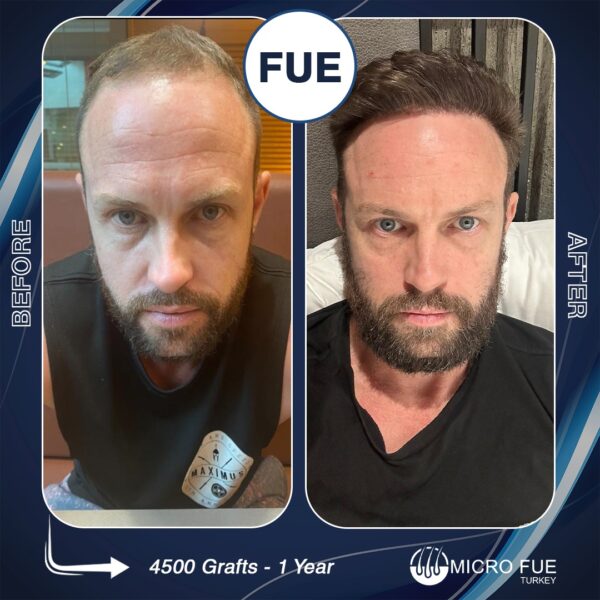
Between nine and twelve months, density and appearance generally become much more established.
Some areas, particularly the crown, may continue maturing beyond this period.
Patients should therefore avoid judging their final result too early.
Can DHI Create Higher Density?
DHI can be useful for precise graft placement, but density depends on much more than the name of the technique.
Final density is influenced by:
- Available donor grafts
- Hair thickness
- Number of hairs per follicular unit
- Recipient-area size
- Existing native hair
- Hair-to-scalp colour contrast
- Graft survival
- Placement pattern
A patient with thick, wavy hair may achieve stronger visual coverage with fewer grafts than someone with very fine, straight hair.
This is why personalised assessment matters.
DHI for Crown Hair Transplantation
Crown restoration requires careful planning because hair naturally grows in a whorl pattern.
The surgeon and medical team need to reproduce the changing directions of this pattern while managing graft numbers efficiently.
Patients with extensive frontal and crown loss may not have sufficient donor capacity to achieve maximum density everywhere.
In these situations, treatment priorities should be discussed honestly.
For some patients, frontal restoration is prioritised first and crown transplantation is considered later.
DHI for Female Hair Transplantation
Women can also be candidates for DHI hair transplantation.
However, female hair loss requires particularly careful assessment because the pattern and underlying causes may differ from typical male pattern baldness.
A medical evaluation should determine whether transplantation is appropriate before surgery is recommended.
For suitable candidates, DHI can be considered for areas such as the frontal hairline or selected regions requiring additional density.
Travelling to Kusadasi for Hair Transplantation
Kuşadası is accessible through İzmir Adnan Menderes Airport, making it practical for many international travellers.
Patients can arrange airport-to-hotel transportation and remain in Kuşadası during their treatment and early recovery.
When booking flights, allow sufficient time for consultation, surgery and post-operative care.
Do not schedule an unnecessarily rushed return journey immediately after treatment.
A well-organised medical trip should leave enough time for the initial procedure, first examination and aftercare instructions.
Hair Transplant and Holiday in Kusadasi
Kuşadası’s coastal location is naturally attractive to visitors, but a hair transplant trip should not be treated exactly like an ordinary beach holiday.
Immediately after treatment, patients need to protect the scalp and follow medical instructions.
Swimming, intense sun exposure and strenuous activities may be restricted during recovery.
Therefore, sightseeing and holiday activities should be planned around the treatment rather than the other way around.
Patients who want a longer Aegean holiday can consider scheduling appropriate activities before treatment or after the initial recovery period, depending on medical advice.
How to Choose a DHI Hair Transplant Clinic in Kusadasi
Price should not be the only criterion.
Before booking, ask who is responsible for consultation, hairline design, extraction, implantation and medical supervision.
Request information about the treatment facility and aftercare.
A professional consultation should also discuss limitations.
Be cautious of guarantees involving exact graft numbers, perfect density or identical results for every patient.
Hair transplantation is a medical procedure, and individual outcomes vary.
Is DHI Hair Transplant Permanent?
Transplanted follicles taken from appropriate donor areas are generally selected because they are more resistant to the processes associated with androgenetic hair loss.
However, the patient’s existing non-transplanted hair can continue to thin over time.
Long-term planning is therefore important.
The objective is not merely to improve today’s appearance but to create a strategy that remains aesthetically sensible if further hair loss occurs.
Is DHI Hair Transplant in Kusadasi Worth It?
For suitable candidates, DHI hair transplant in Kusadasi can provide a modern hair restoration option in one of Türkiye’s most established Aegean tourism destinations.
However, successful treatment depends on much more than choosing DHI.
Proper diagnosis, donor-area management, realistic graft planning, natural hairline design, careful extraction, appropriate implantation and responsible aftercare all contribute to the final result.
Patients should therefore focus on treatment quality and transparency rather than simply choosing the lowest advertised price.
Frequently Asked Questions About DHI Hair Transplant in Kusadasi
Is DHI better than FUE?
Neither technique is automatically better for every patient. The most appropriate method depends on donor quality, recipient area, existing hair, required graft numbers and treatment objectives.
Is DHI painful?
Hair transplantation is normally performed under local anaesthesia. Patients may experience temporary discomfort during anaesthetic administration and sensitivity during recovery.
How long does a DHI hair transplant take?
Treatment can take several hours depending on graft numbers and the complexity of the procedure.
When will I see my final DHI result?
Hair growth develops gradually. Significant improvement may become visible during the first six months, while more mature results are generally assessed around 9–12 months or later depending on the treated area.
Can I fly after a DHI hair transplant?
International patients commonly travel after hair transplantation, but the timing should be planned with the treating medical team according to the procedure and recovery.
How many days should I stay in Kusadasi?
The appropriate stay depends on the treatment schedule and aftercare plan. Patients should allow sufficient time for treatment and immediate post-operative checks before travelling home.
Can the crown and hairline be treated together?
Potentially, yes. However, donor capacity and the total area requiring coverage must be evaluated first. In extensive hair loss, staged treatment may sometimes provide a more responsible approach.
Book Your DHI Hair Transplant Consultation in Kusadasi
Choosing a DHI hair transplant in Kusadasi, Turkey starts with an individual assessment.
Clear photographs of your frontal hairline, top, crown, both sides and donor area can help the medical team make an initial evaluation of your hair-loss pattern and potential graft requirements.
From there, a personalised plan can be created according to your donor capacity, hair characteristics, treatment goals and expected coverage.
If you are researching DHI hair transplant Turkey, compare clinics carefully, understand exactly what your package includes and choose a treatment plan focused on natural results and responsible donor management.
Kuşadası offers international patients the opportunity to access modern hair transplantation while staying on Türkiye’s beautiful Aegean coast.